In 1885, when the Canadian government created Banff National Park in the Rocky Mountains of what is now Alberta, it was motivated less by an appreciation for wilderness than by commercial instinct. The Canadian Pacific Railway had just been completed, and government officials reasoned that a scenic hot springs resort near the tracks would draw well-heeled tourists from the eastern cities. The reserve was a mere 26 square kilometres at first — barely more than a fenced-off wellness retreat.
What began as a commercial calculation became the seed of something far more significant. Today, Canada's national park system encompasses 48 parks covering more than 340,000 square kilometres — an area larger than Germany — and represents one of the world's most ambitious ongoing commitments to environmental protection. Parks Canada, the federal agency that manages the system, also oversees 171 national historic sites and 11 national marine conservation areas.
A Country's Greatest Natural Treasures
The diversity of landscapes within the Canadian national park system is staggering. Banff, the oldest park and among the most visited, is famous for its glacially carved valleys, turquoise lakes and dramatic mountain scenery. Tourists arrive year-round to hike, ski and photograph landmarks such as Lake Louise and Moraine Lake. Jasper National Park, which shares a boundary with Banff, is even larger and somewhat wilder, offering exceptional wildlife viewing — including elk, caribou, bears and bighorn sheep — along with the otherworldly Athabasca Glacier.
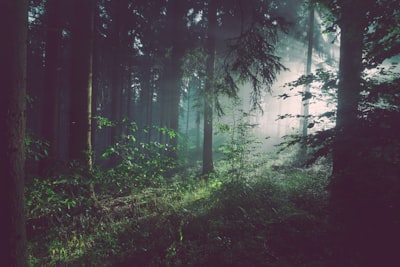
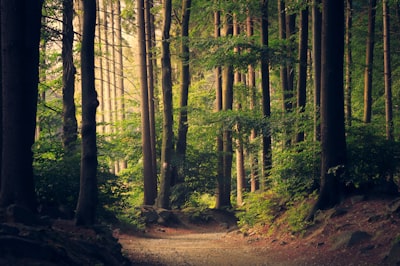
On the opposite coast, Pacific Rim National Park Reserve on Vancouver Island protects a stretch of temperate rainforest and rugged Pacific coastline that feels as remote as any wilderness on earth. Ancient red cedar and Sitka spruce trees rise above a dense understorey of ferns; sea otters and grey whales inhabit the nearshore waters; and the beaches of Long Beach attract surfers who share the waves with grey seals.
"Our national parks are the greatest natural laboratories we have — places where we can study the full complexity of functioning ecosystems without the interference of industrial activity. Protecting them is an act of scientific foresight as much as an aesthetic choice."
The Far North: Canada's Wildest Parks
Canada's most dramatic — and most difficult to reach — national parks lie in the territories of Yukon, Northwest Territories and Nunavut. Nahanni National Park Reserve in the Northwest Territories, one of the first sites inscribed on UNESCO's World Heritage List in 1978, contains Virginia Falls — a cascade nearly twice the height of Niagara — amid some of the most geologically spectacular river canyons in North America. Accessible only by floatplane, it receives only a few thousand visitors each year, making it one of Canada's most pristine environments.
Wapusk National Park on the shores of Hudson Bay in Manitoba is known as the denning capital of the world for polar bears. Each autumn, pregnant polar bears seek out the park's permafrost ridges to dig maternity dens, where they give birth during the polar winter. The spectacle of mother bears and cubs emerging in late winter has become one of Canada's most iconic wildlife tourism attractions, drawing photographers and naturalists to the town of Churchill each November.
Parks Canada: Balancing Access and Conservation
Managing Canada's national parks requires navigating a fundamental tension between public access and ecological preservation. Parks Canada's mandate, established in the National Parks Act, requires the agency to "maintain ecological integrity" as its first priority — but also to provide meaningful opportunities for Canadians to experience and connect with the natural world. These objectives do not always align easily.
Banff, in particular, illustrates the challenge. The park receives roughly four million visits per year, and the Trans-Canada Highway bisects it — a reality that creates persistent conflicts between wildlife movement and vehicle traffic. Parks Canada has invested hundreds of millions of dollars in wildlife underpasses and overpasses along this corridor, creating a network of crossing structures used by grizzly bears, wolves, elk, deer and dozens of other species. Studies of these structures have provided data that is now influencing highway design in conservation areas around the world.
The Path to 30×30
Canada has committed to the global "30×30" conservation target — protecting 30 per cent of the country's land and freshwater by 2030. National parks and other protected areas currently cover roughly 13 per cent of Canada's land area. Meeting the target will require substantial additions to the protected areas network, likely including new national parks in underrepresented regions such as the boreal forest, the Canadian Shield and the Great Plains.
The federal government has announced several new park initiatives in recent years, including the establishment of Tallurutiup Imanga (Lancaster Sound) National Marine Conservation Area in Nunavut — the largest marine protected area in Canadian history at 109,000 square kilometres. The protection of this ecologically rich Arctic waterway, used by narwhals, bowhead whales and millions of seabirds, is widely regarded as one of the most significant conservation achievements in the country's recent history.
As climate change reshapes Canadian ecosystems — pushing species ranges northward, altering fire regimes and accelerating glacial retreat — the national parks serve an increasingly critical function as refugia: protected areas where ecological processes can adapt more freely than in the surrounding human-dominated landscape. What began as a commercial railway accessory in 1885 has become, 140 years later, one of Canada's most essential institutions.