In 1971, Canada became the first country in the world to adopt multiculturalism as an official government policy. Prime Minister Pierre Trudeau announced in the House of Commons that no single culture would be regarded as more Canadian than any other — that the country would affirm, rather than suppress, the cultural identities of its immigrant communities. The Multiculturalism Act, which gave this policy legislative force in 1988, cemented Canada's position as a country philosophically committed to pluralism.
The phrase most commonly used to distinguish Canada's approach from that of the United States is the contrast between a "mosaic" and a "melting pot." In the American model, the expectation — at least rhetorically — has been that immigrants would blend into a unified national culture, shedding their previous identities in the process. In the Canadian mosaic, distinct cultural pieces are meant to retain their individual character while together forming something larger and more colourful than any single piece alone.
The Numbers Behind the Diversity
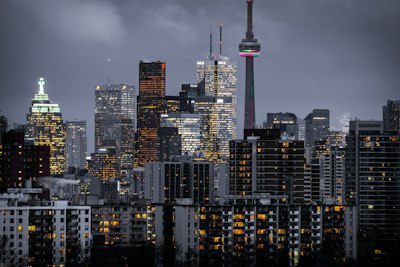
Canada's diversity is not just a policy aspiration — it is a demographic reality of extraordinary scale. According to the most recent census data, more than 23 per cent of Canada's population was born outside the country, making Canada one of the highest proportions of foreign-born residents among G7 nations. In the city of Toronto, more than half of all residents were born abroad. Vancouver is not far behind. In these cities, hundreds of languages are spoken daily, and the full range of the world's cuisines, faith traditions and cultural practices can be found within a few city blocks.
The communities that have shaped Canada's cultural mosaic have shifted considerably over the decades. In the 19th and early 20th centuries, immigration was dominated by people from the British Isles, France, Germany and Eastern Europe. Post-war immigration brought large numbers of Italians, Greeks, Portuguese and Eastern Europeans. From the 1970s onward, immigration patterns shifted dramatically toward Asia, South Asia, the Caribbean, Africa and Latin America. Today, the largest sources of new immigrants to Canada include India, China, the Philippines, Nigeria and Syria.
"What makes Canada remarkable is not that it is multicultural — many countries are — but that it has made multiculturalism a matter of national principle, something to be actively maintained rather than merely tolerated."
Bilingualism: The First Layer of the Mosaic
Before multiculturalism became policy, Canada had already committed to a form of official cultural duality. The Official Languages Act of 1969, passed under Pierre Trudeau, established English and French as the two official languages of the federal government and its institutions. This reflected the reality of a country founded on the coexistence of two major European linguistic communities — the English-speaking majority and the French-speaking population concentrated primarily in Quebec.
Quebec's distinct cultural identity, shaped by its French language, Catholic heritage and particular history within Canada, has been both a source of richness and, at times, of constitutional tension. The Quiet Revolution of the 1960s transformed Quebec from a deeply conservative, Church-dominated society into a modern, secular, politically assertive nation-within-a-nation. The two referendums on Quebec sovereignty — in 1980 and 1995 — were the most dramatic expressions of a question that, in various forms, has never entirely left Canadian political life.
Multiculturalism in Practice: Achievements and Debates
Canada's multicultural society has generated genuine achievements. Interethnic social trust in Canada, as measured by surveys, is higher than in most comparable countries. The integration of immigrant communities into the economic and civic life of Canadian cities has, by most measures, been relatively successful. The contributions of immigrant communities to Canadian science, arts, business and public life are immeasurable.
Yet multiculturalism as a policy also has its critics, from several different directions. Some argue that the emphasis on cultural distinctiveness has impeded the development of a shared civic identity and made it harder to build the social cohesion necessary for a functioning democracy. Others contend that the policy has been better at celebrating cultural difference than at addressing the structural inequalities — in employment, housing and the justice system — that continue to disadvantage racialized communities.
A newer generation of Canadian scholars and activists has argued for a rethinking of the mosaic metaphor itself: the image of separated, static pieces does not capture the fluid, hybrid, cross-cultural reality of how Canadians actually live. The Canada of the future, they suggest, will need not just a mosaic but a living, evolving conversation among its many communities — one in which shared values and mutual obligations are as important as the celebration of difference.